- New
- Out-of-Stock
Reference:
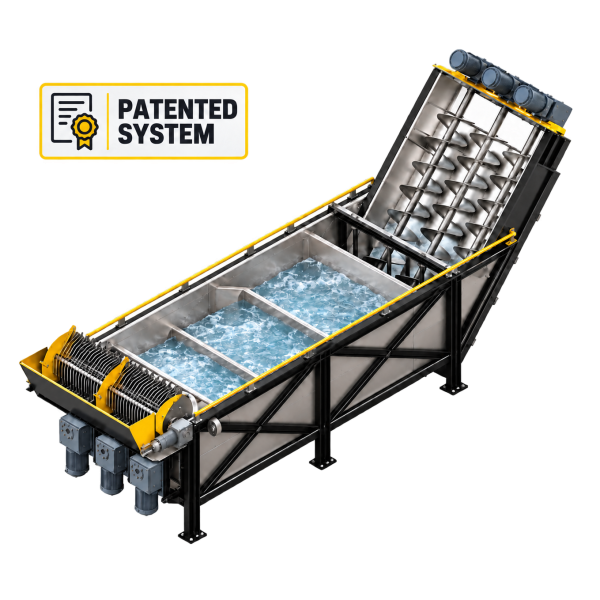
Bioenergy Machinery Sdn Bhd developed this patented EFB Washing System. It cleans oil palm Empty Fruit Bunch fibre. The washed fibre can then be dried, pelletized, briquetted or carbonized.
 Security policy
(edit with the Customer Reassurance module)
 Delivery policy
(edit with the Customer Reassurance module)
 Return policy
(edit with the Customer Reassurance module)
Bioenergy Machinery Sdn Bhd developed this patented EFB Washing System. It cleans oil palm Empty Fruit Bunch fibre before further processing.
Raw EFB contains potassium, sodium, chlorine, soil and sand. These impurities can affect fuel quality and biochar performance. They may also limit the use of EFB in specialized industries.
Our EFB washing machine uses water and mechanical agitation. This process releases soluble minerals from the fibre. The system then separates impurities and discharges the washed material.
The cleaned EFB can be dried, pelletized, briquetted or carbonized.
The process starts with prepared EFB fibre. The fibre enters the washing tank through a controlled feeding system.
Mechanical agitators separate the compacted fibre. This action improves contact between the fibre and washing water. It also helps release potassium, sodium and chlorine.
The washed EFB then moves toward the discharge section. A lifting system removes the fibre from the washing tank. Excess water drains from the material during discharge.
The washed fibre can then enter a mechanical press. Pressing removes more water before the drying process.
A typical production process includes these steps:
Raw EFB reception
Fibre preparation
Controlled water washing
Mechanical agitation
Impurity separation
Fibre discharge
Pressing and dewatering
Drying
Pelletizing or carbonization
Final product testing
The EFB Washing System provides several important benefits:
Reduces water-soluble potassium
Reduces sodium and chlorine
Removes soil, sand and dirt
Improves feedstock consistency
Supports better carbonization control
Produces cleaner EFB fibre
Reduces ash-related variation
Supports higher-value EFB applications
Reduces manual material handling
Provides continuous industrial processing
The system can be customized for different feedstock conditions. Capacity will depend on the customer’s production target.
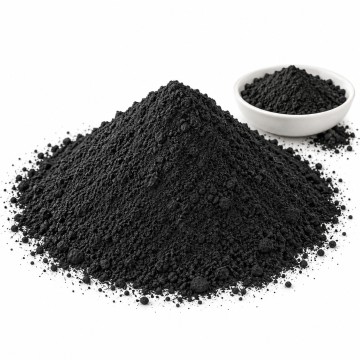
Washed EFB can be carbonized to produce EFB biochar. The finished biochar may be added to approved concrete mixtures.
In this application, the biochar is not burned. Its stable carbon remains inside the concrete product. This may support long-term carbon storage.
The concrete producer must approve the final mixture. Testing must confirm strength, workability and durability.
For this application, raw EFB may contain about 8,000–9,000 ppm of combined sodium and potassium. Washing may reduce the level to about 4,000–4,500 ppm.
These figures are preliminary targets. Actual results depend on the raw EFB and operating conditions. Laboratory testing must confirm the final performance.
Carbonization reduces the mass of the material. Therefore, the finished biochar may have a higher mineral concentration. The final biochar must be tested before customer approval.
The EFB washing machine can also prepare fibre for pellets and briquettes.
Washing reduces unwanted minerals before drying and pelletizing. This can improve the quality and consistency of the finished fuel.
The required washing target will depend on the customer’s market. Some industrial applications require much lower alkali and chlorine levels.
Bioenergy Machinery can configure the process for the required product specification.
The system provides steady contact between EFB fibre and washing water. This helps remove soluble minerals from the material.
The agitators
Bioenergy Machinery Sdn Bhd developed this patented EFB Washing System. It cleans oil palm Empty Fruit Bunch fibre. The washed fibre can then be dried, pelletized, briquetted or carbonized.
Wash EFB briquettes are an eco-friendly biofuel made from the Empty Fruit Bunches (EFB) of oil palm trees. These briquettes are created by washing and compressing the fibrous residue left after palm oil extraction. The washing process removes impurities, resulting in a cleaner, more efficient fuel source. Wash EFB briquettes are used as an alternative to traditional fossil fuels, offering a sustainable energy option with lower carbon emissions. They're commonly used in industrial boilers and power generation, particularly in regions where palm oil production is prevalent.
The disc screening machine efficiently separates and classifies materials based on size and shape. It automates the screening process, removes unwanted particles, and ensures a uniform product. Enhance productivity and quality control in material processing with this versatile equipment.
An EFB briquettes machine converts Empty Fruit Bunches (EFB), a palm oil by-product, into compact, eco-friendly briquettes for fuel. The process involves shredding, drying, and compressing EFB fibers into dense, uniform briquettes with high calorific value and low ash content. These briquettes are sustainable, cost-effective, and ideal for heating and energy production, reducing agricultural waste and promoting renewable energy.
A biomass rotary dryer is a specialized drying equipment used in the biomass industry to efficiently remove moisture from organic materials such as wood chips, sawdust, agricultural residues, and other biomass feedstocks. It operates by rotating the biomass inside a cylindrical drum while introducing hot air, creating an optimal drying environment.
The MSW feeding system is a specialized equipment used in waste management facilities to efficiently transport and feed Municipal Solid Waste (MSW) into processing or disposal units. It is designed to handle the diverse composition and varying sizes of MSW materials, ensuring a smooth and continuous feeding process.
By utilizing the MSW feeding system, waste management facilities can streamline their operations and improve efficiency. It helps prevent material blockages, reduces manual handling, and optimizes the flow of waste into subsequent processing units such as shredders, sorters, or incinerators.
Premium wood pellets Malaysia with PEFC certification. Ideal for pellet fuel systems and wood pellet export. Buy online from trusted wood pellets supplier.
The animal feed vertical mixer machine is a specialized equipment used in the agricultural industry to mix animal feed ingredients efficiently. It has a vertical design and uses a rotating auger or paddle system to ensure uniform blending. It is used in feed mills, farms, and livestock facilities to create customized feed formulations. The machine can handle various ingredients, improves feed quality, reduces waste, and enhances productivity. It is space-efficient, safe to use, and contributes to the health and growth of animals.
EFB Briquettes (30mm x 30mm):
EFB briquettes are a sustainable and eco-friendly biomass fuel made from the empty fruit bunches of oil palm trees. These by-products of the palm oil industry are typically considered waste but can be converted into a valuable energy source through the process of briquetting.
EFB Biochar for low-carbon concrete, produced from washed oil palm empty fruit bunches. Bioenergy’s patented washing process reduces sodium, potassium and chloride before carbonization. Developed for evaluation in concrete and precast products, with the potential to store biogenic carbon in construction materials. Contact us for samples and technical collaboration.
Introducing the Trommel Screening Machine: Revolutionizing Material Sorting. Our Trommel Screening Machine is a cutting-edge solution for efficient material sorting. With its cylindrical drum and perforated screens, it separates different materials based on size, revolutionizing industrial processes across various sectors.
The biomass burner is an innovative and eco-friendly device that converts organic materials into clean and efficient heat and energy. By efficiently combusting biomass such as wood pellets, wood chips, PKS or EFB, it provides a sustainable alternative to traditional fossil fuel-based heating systems.
The MSW metal magnetic separator is a specialized device used in Municipal Solid Waste (MSW) facilities to efficiently separate magnetic metals from the waste stream. It employs magnetic properties to attract and extract ferrous metals, such as iron and steel, from the waste material. By removing these magnetic contaminants, the metal magnetic separator helps improve waste sorting and recycling processes, increasing the recovery of valuable metals and reducing the risk of damage to downstream equipment. This results in enhanced waste management efficiency, increased recycling rates, and a more sustainable approach to MSW handling and resource recovery.
The vibration screening system efficiently separates materials based on particle size using vibration and mechanical forces. It automates the sorting process, improves product quality, and enhances productivity in various industries. It is a valuable tool for optimizing material handling and achieving efficient particle size separation.
Wash EFB (Empty Fruit Bunch) before pelletizing can help reduce the levels of potassium, sodium, and chlorine. Wash EFB Pellets mainly for the Japan power plant market lower than 2000ppm for Japan power plant standard requirement. By focusing on washing EFB pellets, producers can effectively address the specific needs of the Japanese market, ensuring compliance with regulations and contributing to Japan’s renewable energy goals.
Pellet mill is a machine that compresses wood materials into small pellets. These pellets serve as a renewable fuel source. The mill takes wood residues like sawdust, EFB and applies high pressure to shape them into pellets.